
Welcome to Pendant and Ring. This article is part four of the Jewelry History Series. We started in the year 0C.E and continued to 1501 in 500-year intervals. From the 1500s, we explore one century per article. I linked the first three articles in the Jewelry History Series at the end of this installment.
The rise of the Portuguese and Spanish empires takes place in the 1500s. Following the age of exploration, empires put down roots and farmed resources from every land they invaded. Colonial exploitation brought a wealth of raw materials to the European continent.
The Portuguese shipped sapphires, rubies, and Golconda diamonds from India. The table cut was the most popular gem style for the first half of the century. During the second half of the century, Lapidarists developed new cutting styles by increasing the number of facets. More surfaces increase the brilliance of the final product.
The Spanish shipped precious metals from the Americas to skilled makers in Florence and Paris. They crafted intricate silver settings, religious iconography, serving plates, coins, and candlesticks. They also used the metals to trade for gems and other goods.
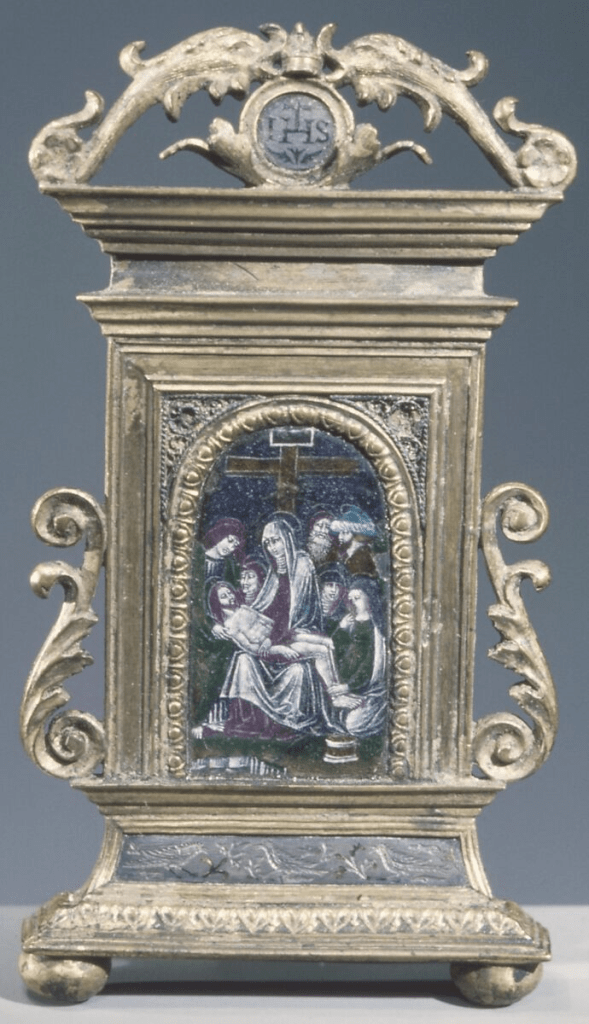
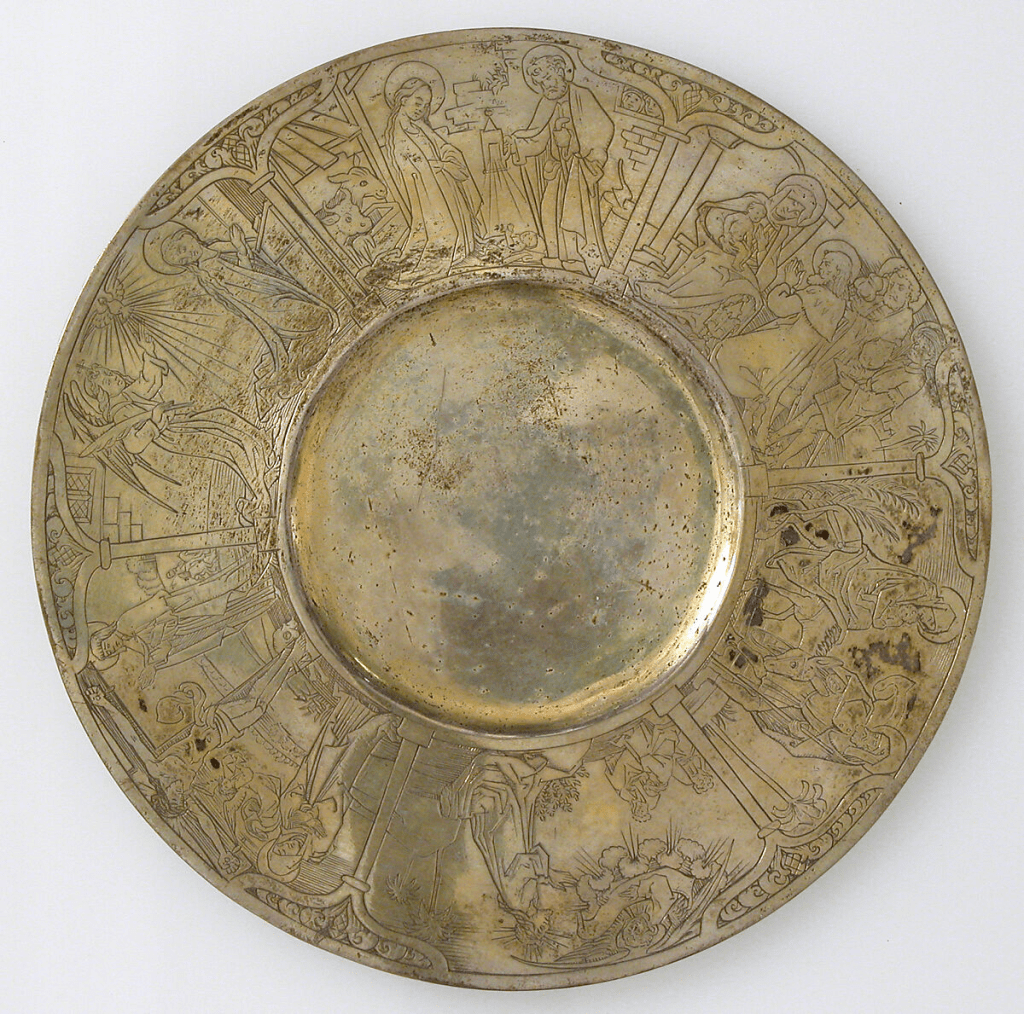
The Holy Roman Catholic Church sailed with and established significant influence in the Portuguese and Spanish Empires. The Church swelled their coffers with relics decorated with gold-plated and gilt idols, chalices, patens, and cruets, as well as precious metals for candlesticks and the other tools of mass.*
As the empires grew, the seafarers brought sapphires and rubies to jewelers. The influx of new materials created more availability, so the royalty and nobles started collecting bejeweled items. Personal jewelry collections developed, and pendants replaced brooches. [3]

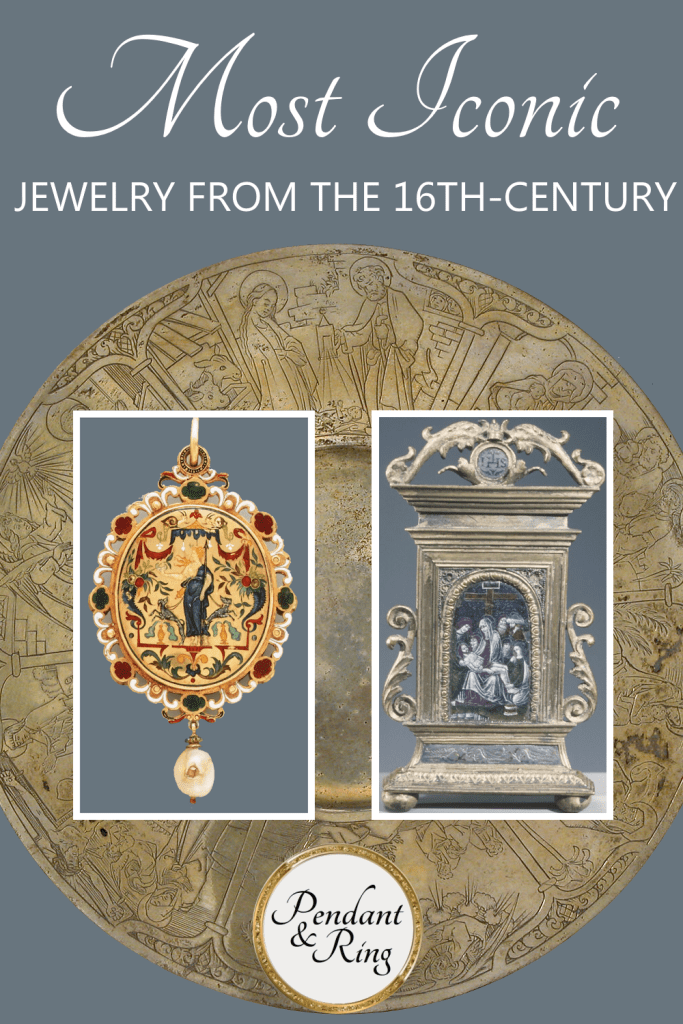
Pendants offered jewelry wearers the option to change their look and still wear their favorite chains. Some pendants, like the one shown here, were made reversable. On the face, jewels and a gold raised sculpture are embellished with enamal. Reversible pendants effectively doubled the jewelry collections of 16th century fashionistas.
In the latter half of the century, fashion spread across the seven seas, and the body chain made a European comeback. the nobility started wearing chest chains and waist chains with pendants and charms over their clothes. [5] Noblemen wore chest chains like sashes. They might attach a sundial charm, an encrusted pendant, and a bottle of laudanum or tincture of opium to their chest chain. Noblewomen wore waist chains. They attached the same things as their peers, plus enameled pendants and charms.
Religious themes persisted in jewelry design, and a resurgence of Greek and Roman influence added more variety to jewelry subjects. Christian, Zodiac, and Greek deity symbols could co-exist in a single ensemble. On any given day, a wealthy noblewoman might wear:
- a strand of pearls in her hair
- gold stud earrings with interchangeable hangers featuring a two to three-centimeter disk of concentric gold circles with a stone setting soldered in the center
- a thick rope chain necklace with a heavily encrusted cross made of emeralds and rubies with a center diamond to show her devotion
- a waist chain with a sundial so she was on time to mass, a sapphire etched with a scorpion to ease her hot flashes, a tincture of perfume to spare her the smell of poor hygiene, and a pearl-encrusted, pink enameled, gold embellished, Venus statuette charm she received as a favor
- a ring on each finger, each engraved with a special symbol or initial to remind her of her children, living and dearly departed
- and clip-on shoe charms, usually teardrop pearls embellished with diamonds
Gentry and yeoman emerged as middle-class jewelry collectors. The gentry could afford real gems but also wore pendants and other items fashioned out of glass and crystal that imitated the gems they coveted. The yeoman could not afford real gems, so they bought precious metal pieces accented with dyed glass and crystal in versions similar to custom-made nobility items.
As the century continued, jewelry designers embraced the Maximalism design theory: More is never enough! The opulent build-up led to the Baroque period that started in 1600 and lasted to 1750. But more on that next time.
Subscribe for the next entry in the Most Iconic Jewelry series!
Read more Iconic articles.

Find your next treasure today!
Notes:
*Patents are the plates, and cruets are the water and wine bottles used to serve communion in Catholic and many Protestant faiths.
Sources:
[1] Pieta: https://www.metmuseum.org/art/collection/search/197135
[2] Paten: https://www.metmuseum.org/art/collection/search/466342
[3] Pendants in the 16th-century: http://www.elizabethancostume.net/jewelry/
[4] PendantImage: https://www.metmuseum.org/art/collection/search/193692
[5] Body Chains: https://alromaizan.com/blog/an-overview-of-traditional-body-chain-history
 Pendant and Ring
What do you think?